
Analyze the secrets behind MrBeast's editing style in 2026. From 'breathing' pacing to invisible VFX, learn how to replicate his retention strategy.
🐯 Key Takeaways
- New Pacing: Shifted from "hyper-stimulation" to "breathing room" (Story over Stimulus).
- Invisible VFX: Uses set extensions and rig removal to create infinite scale.
- Audio Narrative: Sound design (risers, silence, impacts) drives retention more than visuals.
- Payoff Ladder: Mini-payoffs every 30-60 seconds to keep viewers hooked.
In the history of digital media, no singular entity has fundamentally altered the landscape of video creation quite like Jimmy Donaldson, better known to the world as MrBeast. With a subscriber count effectively surpassing the population of the United States (460 million and counting) and view counts that regularly eclipse the Super Bowl, MrBeast isn’t just a YouTuber. He is a one-man media conglomerate, a retention algorithm in human form, and the undisputed king of the modern attention economy.
For years, creators and critics alike have tried to reverse-engineer his success. Most surface-level analyses point to the obvious: the money. “Of course he gets views,” they say. “He gives away private islands and millions of dollars.” But this reductionist view misses the forest for the trees. If money were the only variable, the platform would be flooded with billionaires dominating the trending tab. It isn’t.
The real secret sauce of the MrBeast empire isn’t the cash, the yelling, or even the stunts. It is the editing. It is a forensic, almost scientific approach to the timeline that treats every frame as a battleground for user attention. His team doesn’t just “cut” video; they engineer retention.
If you want to understand why viewers can’t look away, you have to look past the spectacle and stare directly at the timeline. In this deep dive, we are going to deconstruct the specific cutting patterns, audio engineering, and visual effects that define the “MrBeast Style” in 2026—and show you exactly how to replicate the principles (if not the budget) for your own channel.
1. The “Breathing” Pace of 2026: A Strategic Shift
To understand where we are today, we have to look at where we came from. From 2020 to 2023, the “MrBeast Style” was synonymous with sensory overload. This was the era of “Retention Hacking” at its most aggressive. The philosophy was simple: If the screen doesn’t change every 1.5 seconds, the viewer will click away.
During this period, a typical MrBeast video felt less like a story and more like a fever dream. Dead air was non-existent. Pauses were surgically removed. Every sentence was overlapped. The goal was to leave the viewer no time to think, only time to consume. And it worked—until it didn’t.
By late 2024, a shift occurred. Audiences began to suffer from “retention fatigue.” The hyper-stimulated style became exhausting. Retention rates plateaued. Jimmy, always the data scientist, noticed this trend before anyone else. In a now-famous pivot, he publicly advised creators to slow down.
The New Philosophy: Story Over Stimulus
In 2026, the pacing of a MrBeast video is radically different. It is calculated, rhythmic, and surprisingly patient. He realized that for a “high” to feel high, you need a “low.” When everything is high-energy, nothing is.
The “Breathing Room” Technique:
Modern Beast videos now feature distinct moments of “breathing room.” These are 3-5 second windows where the editing slows down significantly. The music drops out. The camera holds on a reaction. The ambient sound of the room takes over.
Why does this work?
- Contrast Creates Impact: By slowing down, the subsequent explosion of action feels significantly more intense. It breaks the monotony of constant speed.
- Emotional Connection: You cannot bond with a character who is moving at 2x speed. These pauses allow the audience to see the contestants as humans, not just assets in a game. When a contestant loses in 2026, you feel it because the editor gave you time to feel it.
- Joke Delivery: Comedy requires timing. The “millennial pause” or the awkward silence is a staple of humor. The old editing style smothered jokes; the new style lets them breathe.
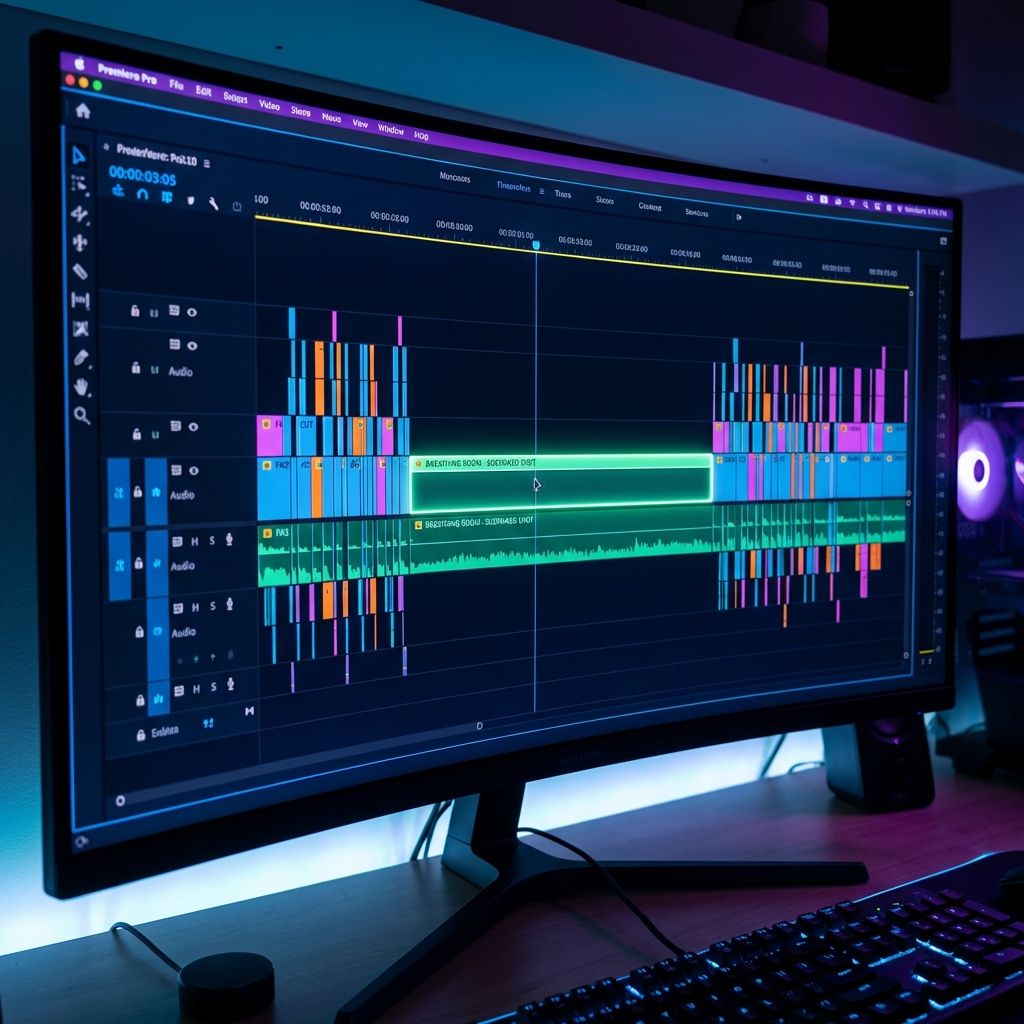
Watch a video like “Ages 1 to 100 Decide Who Wins $500,000.” Notice how the intro is fast—hooking you in—but the middle “act” slows down to interview the 90-year-old woman or the 10-year-old kid. The cuts lengthen. You hear them breathe. Then, as the elimination approaches, the pace accelerates again. It is a bell curve of intensity, not a flat line.
2. Visual Language: CGI as Reality Expansion
One of the biggest misconceptions about MrBeast’s production is the line between “practical” and “digital.” We assume that because he builds massive physical sets, everything we see is real. In reality, MrBeast’s post-production team operates much like a Marvel VFX house.
You might think those massive sets are 100% real. They aren’t. And that’s the genius.
Set Extensions and The Unreal Engine Workflow
In 2026, MrBeast’s team relies heavily on Set Extensions. This is a technique used in Hollywood to make a soundstage look like a stadium. If Jimmy builds a wall that is 20 feet high, the wide shot might show a wall that looks 100 feet high.
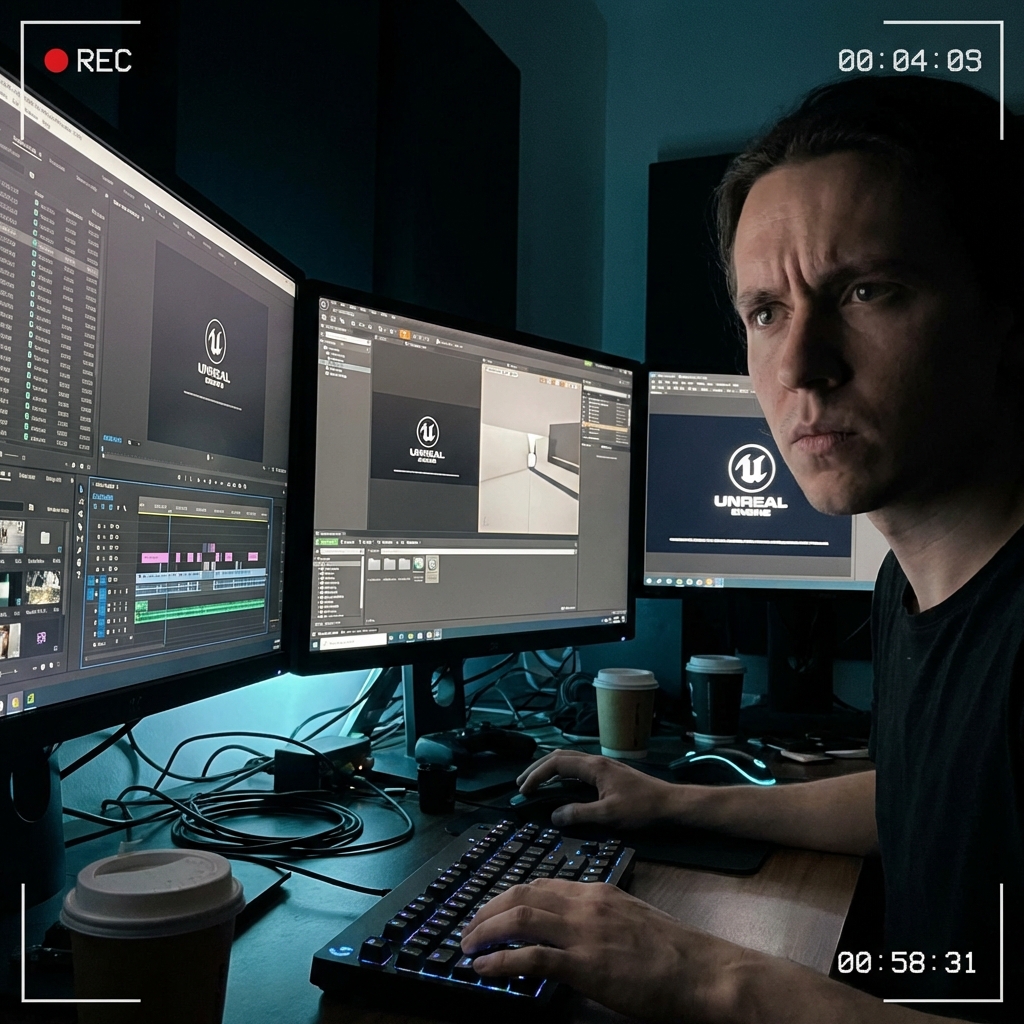
Using tools like Unreal Engine and After Effects, editing teams track the camera movement and digitally paint in “more set” above the physical limit. This creates a sense of scale that is physically impossible (or financially wasteful) to build. The viewer perceives “infinite scale,” which triggers a subconscious awe.
Invisible VFX
The best Visual Effects are the ones you never see. MrBeast’s editors are masters of Invisible VFX. This includes:
- Rig Removal: Safety wires, microphone booms, and camera shadows are digitally painted out frame by frame. This keeps the immersion total.
- Sky Replacements: A gray, cloudy day makes a video feel depressing. The team routinely replaces dull skies with vibrant, saturated blue skies to maintain the high-energy “cartoon reality” aesthetic.
- Face Cleanups: While not “beauty filtering,” distracting elements like sweat stains or stray hairs might be removed if they distract from the speaker’s face.
It’s not about “tricking” you; it’s about removing any visual friction that breaks the spell. Every pixel is manicured to look “more real than real.”
The “GoPro” vs. “Cinema” Texture
Another subtle texture in his 2026 style is the deliberate mix of camera formats. The team uses $50,000 RED cameras for “God’s Eye” wide shots and establishing visuals, but they mix in grainy, shaky GoPro footage for the POV shots.
This mix is crucial. The Cinema camera says “Authority and Budget.” The GoPro says “Authenticity and Danger.” If the whole video were shot on RED cameras, it would feel like a TV commercial—too polished, too fake. The GoPro footage grounds it in reality. It reminds you that these are real people running through mud.
3. Sound Design is the Narrative Driver
If you watch a MrBeast video on mute, you are missing 50% of the retention engineering. In fact, many editors argue that the audio timeline is more complex than the video timeline.
The audio isn’t just supporting the video; it’s driving it.
The “Impact” Layer
Every single visual movement in a MrBeast vido has a corresponding sound. This is known as “Mickey Mousing” in animation, but here it is used for retention.
- Text Pops: When text appears on screen, it has a “pop” or “whoosh” sound.
- Camera Zooms: A quick zoom is accompanied by a subtle “whip” sound.
- Transitions: A scene change often has a “hit” or “boom.”
These sounds are not stock “cartoon” noises. They are custom-layered, bass-heavy impacts that you feel in your chest (if you have subwoofers) or that cut through the tinny speakers of an iPhone. They provide a subconscious rhythmic beat to the video.
The “Glitch” and The “Rise”
Transitioning between scenes is dangerous. It’s an “exit ramp” where a viewer might get bored. To combat this, one key technique is the audio Rise (or Riser). This is a sound that starts low and increases in pitch and volume, building tension.
Just as the riser hits its peak… SNAP. The cut happens. The audio resolves. The tension is released. This cycle of “Tension -> Release -> Tension” keeps the viewer hooked. You physically want to hear the resolution of the sound.
The Strategic Use of Silence
As mentioned in the Pacing section, the absence of sound is now used as a weapon. In previous years, music was a constant wall of noise. Now, the music cuts out completely for key moments.
When a contestant drops the $100,000 case? Silence. No music. No sound effects. Just the thud of the case.
This sudden drop to distinct, quiet reality forces the viewer to lean in. It signals: “Pay attention. This is serious.” It is dynamic range applied to attention spans.
4. The “Payoff” Structure: Writing for the Edit
Editing begins before the cameras even roll. The MrBeast writing team structures the video specifically for the edit. They use a concept called “The Payoff Ladder.”
A typical 10-minute video is not one long story. It is a series of mini-stories, each 30-60 seconds long. Each mini-story has a Setup, a Conflict, and a Payoff.
- 0:00 – 0:30: The Main Hook (The $1M Prize).
- 0:30 – 2:00: The First Mini-Game (Reviewing the Rules). Payoff: Someone gets eliminated immediately.
- 2:00 – 4:00: The Alliance Formed. Payoff: Betrayal.
- 4:00 – 6:00: The Physical Challenge. Payoff: The favorite loses.
By stacking these mini-payoffs, the viewer always feels like they are “accomplishing” something by watching. They get a hit of dopamine every minute. If you save the only payoff for the end of the video, 90% of people won’t make it there.
How You Can Replicate This (Without 50 Editors)
You’re probably thinking, “Great. Jimmy has a warehouse of editors and a render farm. I have a laptop and high hopes.”
Here’s the truth: You don’t need the staff. You need the principles. You can execute 80% of this style with basic software like Premiere Pro or DaVinci Resolve.
Step 1: The “Delete” Edit
The first pass of your edit shouldn’t be adding effects. It should be deleting. Be ruthless. If a sentence doesn’t advance the story or land a joke, delete it. If you stumble, cut it. Your raw footage is a block of marble; your job is to remove everything that isn’t the statue.
Step 2: Layer Your Audio
Stop treating audio as an afterthought. Go to a stock library (like Epidemic Sound or Artlist) and find:
- Background Music: Get “Stems” if possible, so you can remove the drums during quiet moments.
- Impacts/Hits: Find 10 good “cinematic hits” and use them on your cuts.
- Risers: Place these before your biggest reveals.
Spending 30 minutes on sound design will improve your production value more than purchasing a new $2,000 camera.
Step 3: Visual Polish via Masking
You don’t need Unreal Engine to do “Set Extensions.” You can use simple masking in Premiere.
Is your room messy? Mask out the background and blur it.Is the lighting flat? Add a “vignette” mask to darken the edges and draw the eye to the center.These subtle touches guide the viewer’s eye and make your footage look intentional.

The FT Creative Advantage
Knowing what to do is easy. Reading this article is easy. Sitting in a dark room for 14 hours staring at waveforms to perfectly sync a “woosh” sound with a text popup? That is the hard part. That is the grind that burns creators out.
That’s where we come in.
At FT Creative, we don’t just “chop” footage. We engineer retention. We have built our entire workflow around the high-retention principles of 2026. Our editors are trained in:
- Pacing Dynamics: Knowing when to cut fast and when to let it breathe.
- Advanced Sound Design: We have a proprietary library of impacts, risers, and textures.
- Invisible VFX: We clean your footage, extend your sets, and polish your image until it shines.
You bring the personality. You bring the footage. We’ll bring the polish that turns “just another video” into a viral asset. You focus on being the Creator; let us focus on being the Engineer.

FT Creative Team
Experts in scaling YouTube channels, video editing, and viral storytelling.


